
Craters, lava, caves and open steppe about 196 km (122 miles) from Punta Arenas. A different, ancient side of Patagonia with very few visitors.
When you think of Patagonia, you probably picture granite towers, glaciers and turquoise lakes. But there's another Patagonia: one of ancient volcanoes, black lava fields, caves and open steppe stretching to the horizon. That Patagonia is called Pali Aike, and it's a day trip from Punta Arenas.
Its name has been interpreted as “desolate place” in the language of the region's Indigenous peoples. But once you arrive, you'll find it's anything but empty: craters you can explore on foot, a cave with more than 11,000 years of human history and guanacos crossing your path.
What makes Pali Aike different?
First, hardly anyone makes it out here. In 2024 the park recorded just 3,274 visits, less than 1% of all visits to parks and reserves in Magallanes that year. That means quiet trails, silence and a real sense of discovery.
Second, the landscape looks nothing like the rest of your trip. Instead of forests and ice, you'll find volcanic cones, craters, rivers of solidified lava and golden steppe fading into the horizon. It's also the only national park in Chile that protects the Magellanic steppe, a landscape typical of this region that often goes unnoticed.
Already explored Torres del Paine? Crossed the steppe on the Tierra del Fuego Full Day Tour and want more? Then Pali Aike is your next stop: the same Patagonia, seen from its volcanoes.
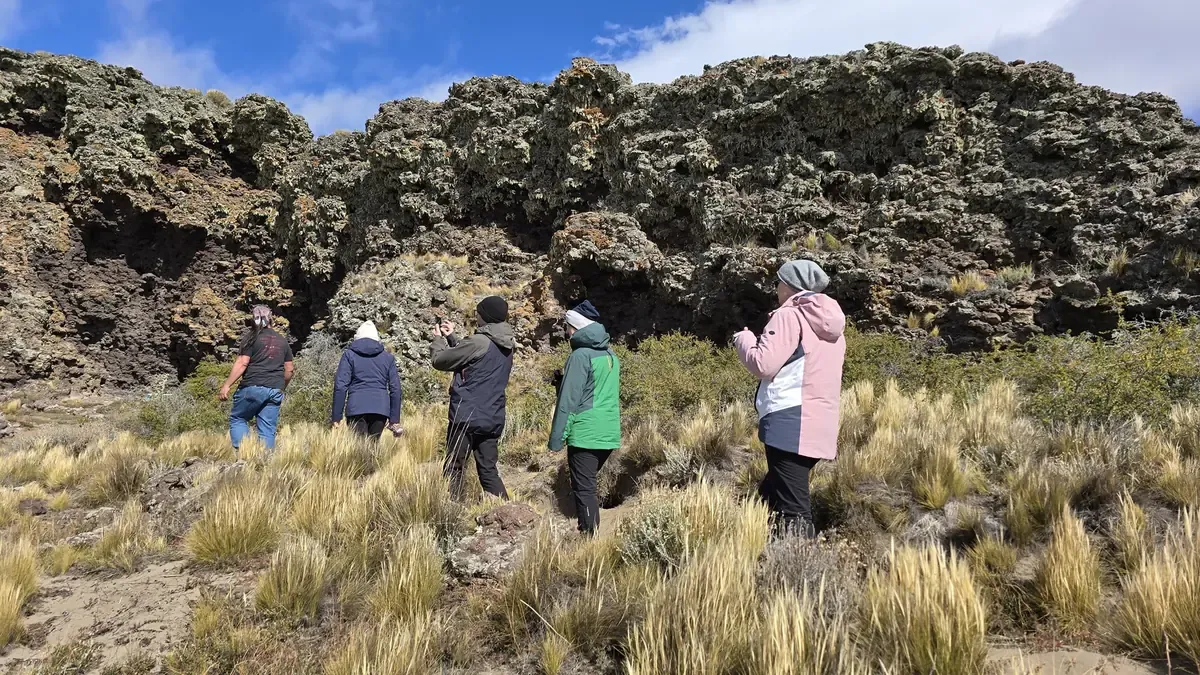
Author: Caminos Tours
Walking among volcanoes
Pali Aike is a vast volcanic field. Thousands of years ago, a series of eruptions left behind craters, cones and wide sheets of lava. Morada del Diablo, one of the park's most striking craters, formed between 10,000 and 16,000 years ago, and the area's most recent volcanic activity took place around 7,500 years ago.
You'll feel it underfoot: the ground shifts from black lava to the red and ochre walls of the craters, and in places it looks as if the lava cooled yesterday.
And here's a fun fact: these volcanoes carried rocks up from deep inside the Earth. Scientists are still studying them, and a 2026 study used them to better understand what lies beneath Patagonia.
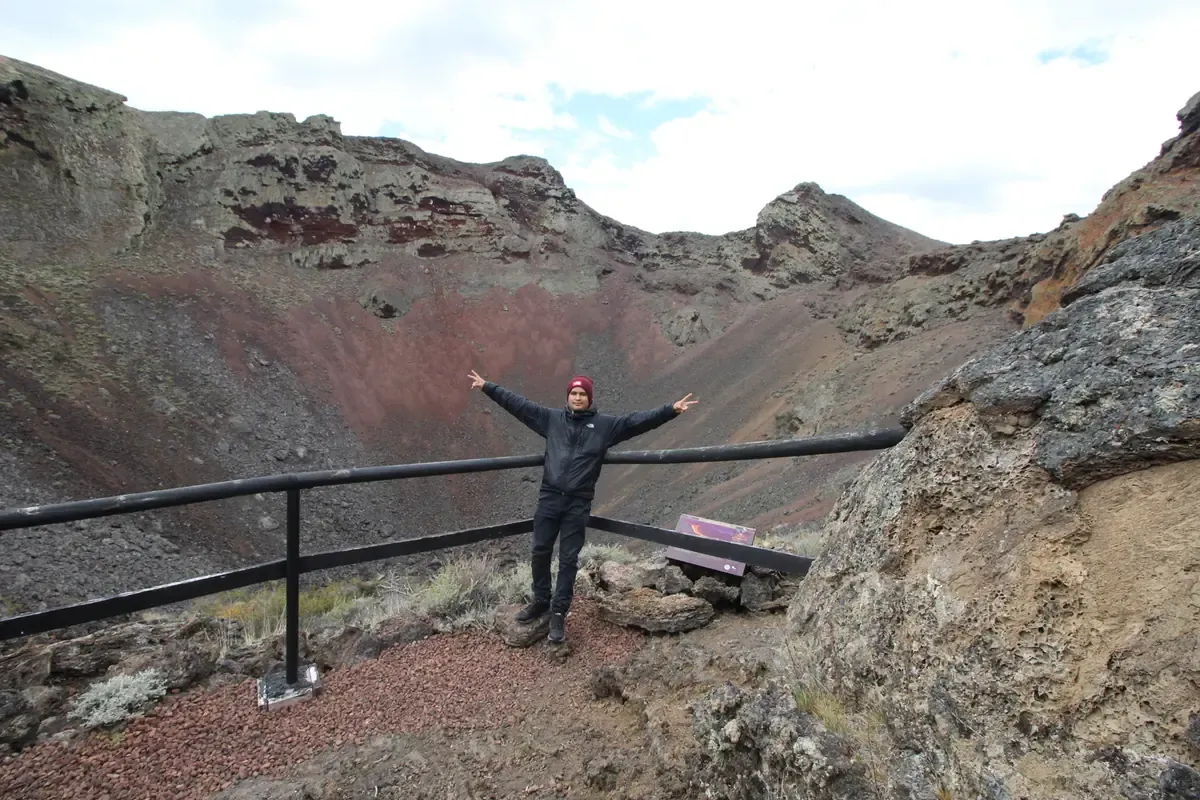
Author: Caminos Tours
A cave with 11,000 years of history
Long before ranches and roads, people already lived on this steppe. At Pali Aike Cave, archaeologists found traces of people who lived here more than 11,000 years ago, at the end of the last Ice Age. A short, easy trail of about 600 meters leads there, and it's one of the highlights of the visit.
Back then, early inhabitants shared the steppe with animals that no longer exist, like the mylodon, a giant ground sloth, and a native American horse that went extinct thousands of years ago. At Fell Cave, in the same volcanic area but outside the park, archaeologists found hearths, stone tools and bones of these animals, revealing what life was like at the end of the world thousands of years ago.
If you've already visited the Milodon Cave on the way to Torres del Paine, Pali Aike completes the story: that of the people who roamed this steppe while the mylodon was still alive.
Research is still going. In 2025, archaeologists from the University of Magallanes shared their latest findings with tour guides from Punta Arenas, so this story can reach every visitor.
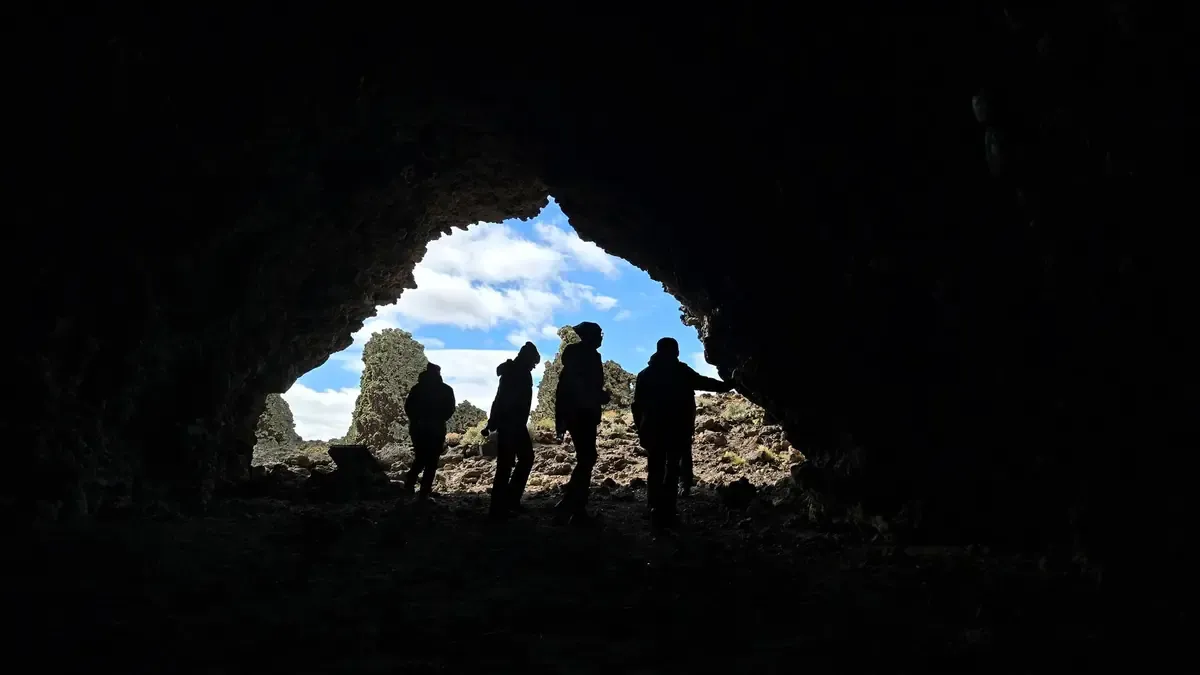
Author: Caminos Tours
What the day feels like
Pali Aike is explored on foot. Trails cross lava fields, lead to crater rims and wind through coirón, the golden tussock grass that covers the steppe. There are options for different levels: the Pali Aike Cave trail is easy, and the Morada del Diablo–Pozo del Diablo route is moderate. The volcanic ground is uneven, so wear hiking shoes.
Guanacos are a common sight along the way, and with some luck you'll spot foxes, rheas, eagles and birds at lagoons like Laguna Ana. Pumas live in the park too, though they're very hard to see.
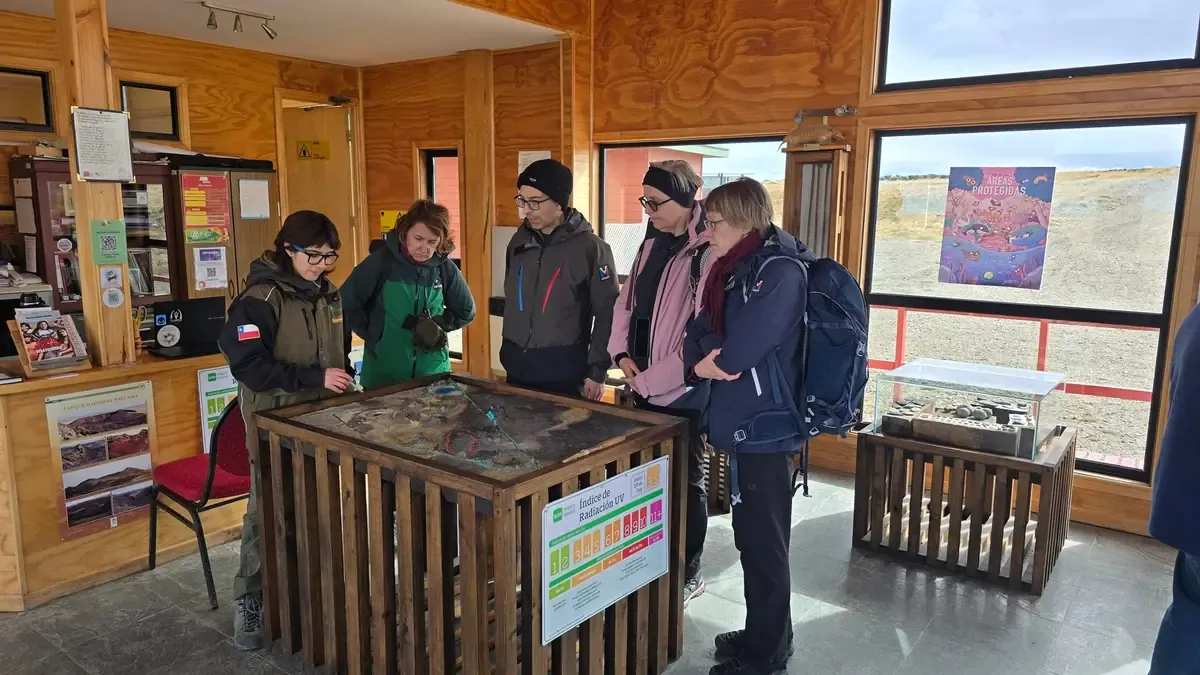
Then there's the Patagonian wind, which can gust up to 100 km/h (62 mph) and is as much a part of the experience as the craters. The park keeps things simple: an information center, restrooms and areas to rest and eat. Everything else is open steppe.
A place like this is protected by everyone: stay on the trails, don't take rocks, don't feed the animals, and leave pets and drones at home. Because of avian flu, keep your distance from birds.
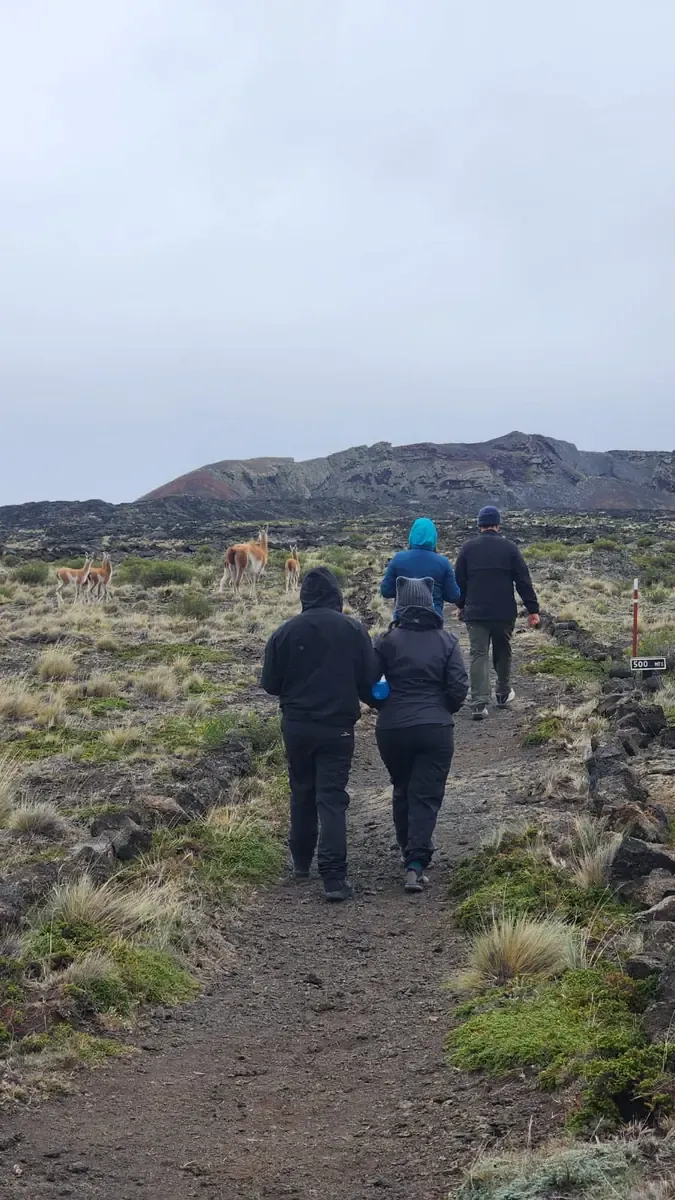
Author: Caminos Tours
How to visit Pali Aike from Punta Arenas
The park is about 196 km (122 miles) from Punta Arenas, near the Argentine border: roughly two and a half hours by road, mostly paved with a final gravel stretch. The drive is part of the experience, with miles of open steppe building up to what's ahead.
You can visit from October to April, Tuesday to Sunday, 8:30 am to 7:30 pm (last entry at 5:30 pm). It's closed on Mondays. Hours can change with the weather, so check pasesparques.cl before you go.
It's a day trip, since camping isn't allowed in the park. Bring layers, a windbreaker, hiking shoes, water, sunscreen and something to eat: water is hard to come by inside the park.
The easiest way to visit is on a tour from Punta Arenas: we take care of transport and logistics, so all you have to do is walk and enjoy.
Author: Caminos Tours
Ready to see the other Patagonia?
Craters, lava and steppe without the crowds, on a day trip from Punta Arenas.
Frequently asked questions
Where is Pali Aike National Park?
In the San Gregorio area of Chile's Magallanes Region, about 196 km (122 miles) from Punta Arenas and near the Argentine border.
What makes Pali Aike special?
Its craters, lava fields, caves and steppe, very different from the mountain and ice landscapes Patagonia is known for. It's also the only national park in Chile that protects the Magellanic steppe.
Is Pali Aike crowded?
No. In 2024 it recorded 3,274 visits, less than 1% of all visits to protected areas in Magallanes.
When can I visit?
From October to April, Tuesday to Sunday, 8:30 am to 7:30 pm, with last entry at 5:30 pm. Hours can change with the weather.
Is hiking in Pali Aike difficult?
There are trails for different levels. The Pali Aike Cave trail is easy and Morada del Diablo–Pozo del Diablo is moderate. Hiking shoes are recommended.
What should I bring?
Layers, a windbreaker, hiking shoes, water and sunscreen. The wind can be very strong and water is hard to come by inside the park.
Sources
- CONAF: Pali Aike National Park profile and season opening announcement (October 2026).
- Chilean Undersecretariat of Tourism and SERNATUR: protected-area visits in Magallanes (2024).
- Schettino et al. (2026), Earth and Planetary Science Letters.
- Martin, F. (2022), “Cueva Fell reinterpretada”.
- Smithsonian Institution, Global Volcanism Program.
- Pases Parques: pasesparques.cl